๐Ÿ›ฐ๏ธBepi and Mio Go to Mercury
๐ŸŽฎ Play
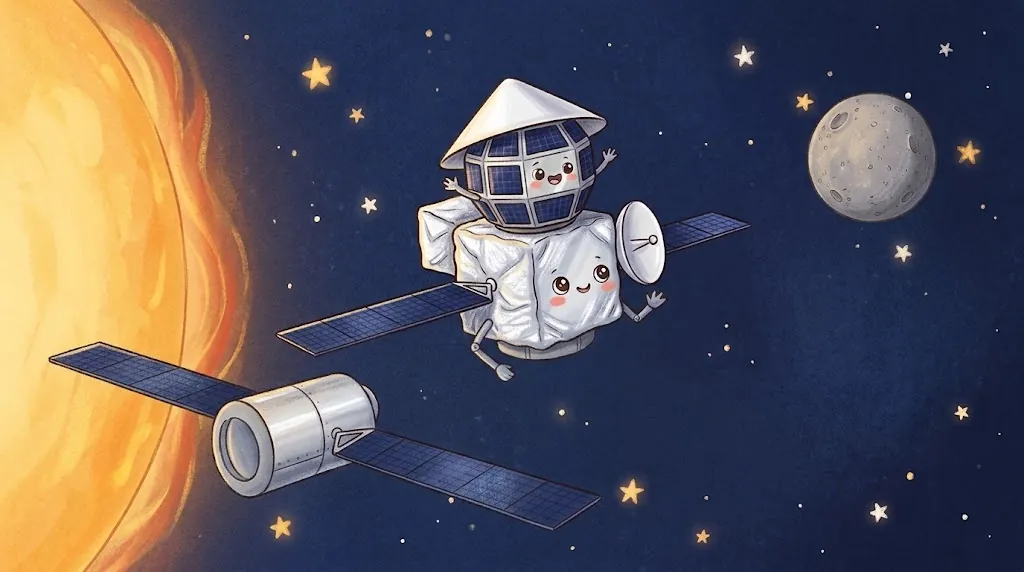
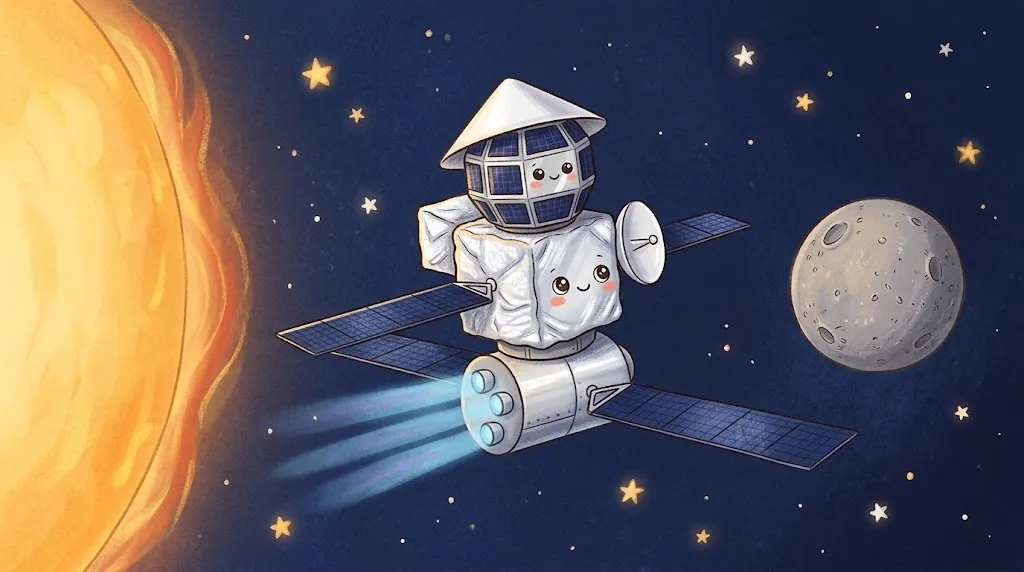
Next to the huge glowing Sun, a little stack of spacecraft flies toward gray Mercury: an engine module with long solar wings and blue engine beams, Bepi the box-shaped spacecraft, and Mio peeking out of a white cone hat on top.

Bepi and Mio's Long Trip to Mercury

Mercury is the planet closest to the Sun. You might think it's an easy trip. But two little spacecraft, Bepi and Mio, have been flying for 8 years to get there!

In November 2026, they plan to finally go around Mercury. Let's find out why the trip is so long.

๐Ÿ‘† Tap the glowing circles. Tap ๐Ÿ“– Read to me to hear the story. Press Next โ–ถ to keep reading, or jump straight to the game.
Who goes around faster?

Meet Mercury! It's the smallest planet, and the closest one to the Sun. If Earth were a coin, Mercury would be about the size of a blueberry.

Mercury is also the fastest planet. It zooms around the Sun in just 88 days. That's one Mercury year! ๐Ÿ‘† Start the race.

โšก Mercury rushes along at about 47 km every second. That's fast enough to go from Taipei to Kaohsiung in about 6 seconds!
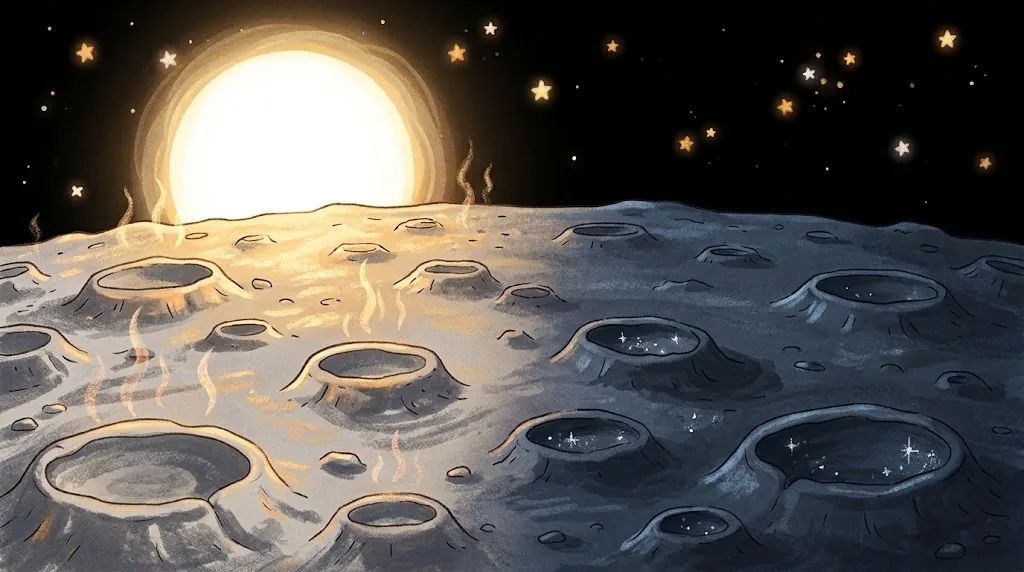
Mercury's surface, half in blazing sunlight under a huge Sun and half in freezing darkness with frost sparkling in a shadowed crater.
๐ŸŒก๏ธ ?

Mercury has no air to keep it cozy, like a blanket. So on the day side, the ground bakes in the sunshine. On the night side, it gets colder than any freezer. ๐Ÿ‘† Try both sides!

From Mercury, the Sun looks more than 3 times bigger than it does from Earth.

๐ŸŒ… Mercury spins very slowly. From one sunrise to the next takes 176 Earth days. That's one long day!
How do you stop at Mercury?

Here's the tricky part. Flying toward the Sun is like rolling down a giant hill. The closer you get, the faster you go!

To stop at Mercury, a spacecraft has to brake, a lot. If it's too fast, it zooms right past. ๐Ÿ‘† Try rolling without brakes, then with brakes.

๐Ÿช Jupiter is about 10 times farther from Earth than Mercury, but NASA's Juno spacecraft reached Jupiter in 5 years. Getting into orbit around Mercury takes longer, because of all that braking!
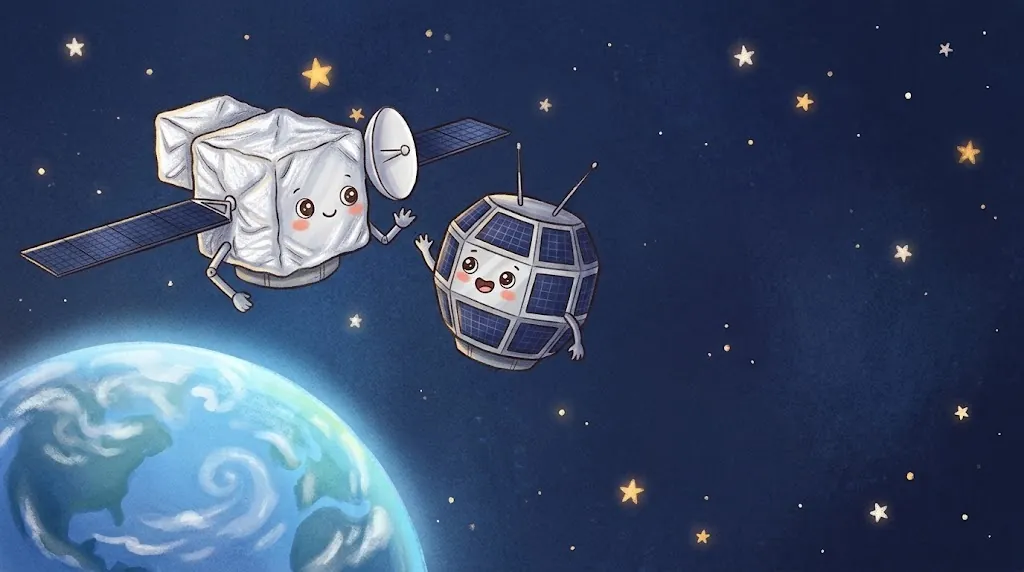
Bepi, a box-shaped silver spacecraft with a long solar wing and a dish antenna, and Mio, a small eight-sided drum-shaped spacecraft, float near Earth and wave hello.

Meet the team! Bepi was built in Europe. Its cameras will make maps of Mercury's whole surface. Mio was built in Japan. It will study Mercury's magnetic field and the wind of tiny bits that blows from the Sun.

Together, their mission is called BepiColombo. ๐Ÿ‘† Say hello to them!

๐ŸŒŠ Mio (ๆพช) is a Japanese word for a waterway: the safe path a ship follows across the water. Mio will sail through the Sun's wind, like a ship on the sea.
At night on a tropical coast, a big white rocket with two side boosters lifts off on a column of fire, with clouds of smoke and palm trees all around.
October 20, 2018

On October 20, 2018, a big Ariane 5 rocket blasted off from French Guiana, in South America, near the equator. Inside, Bepi and Mio were stacked up like a tower.

At the bottom was an engine module, then Bepi, then a white cone that kept Mio safe from the Sun. ๐Ÿ‘† Launch the rocket!

โš–๏ธ All together, the stack weighed about 4,100 kg, about as heavy as three cars.
The spacecraft stack with its engine module glowing with soft blue engine beams.
Push: 0 days
The engine module has special engines.

The engine module had ion engines. They shoot out a soft blue beam of tiny charged bits of gas. Each push is very, very gentle.

But an ion engine can keep pushing for weeks and months without stopping. A little push, again and again, makes a big change! ๐Ÿ‘† Hold the button.

๐Ÿ“„ At full power, two of the engines together push about as hard as six sheets of paper resting on your hand. Gentle, but very patient!
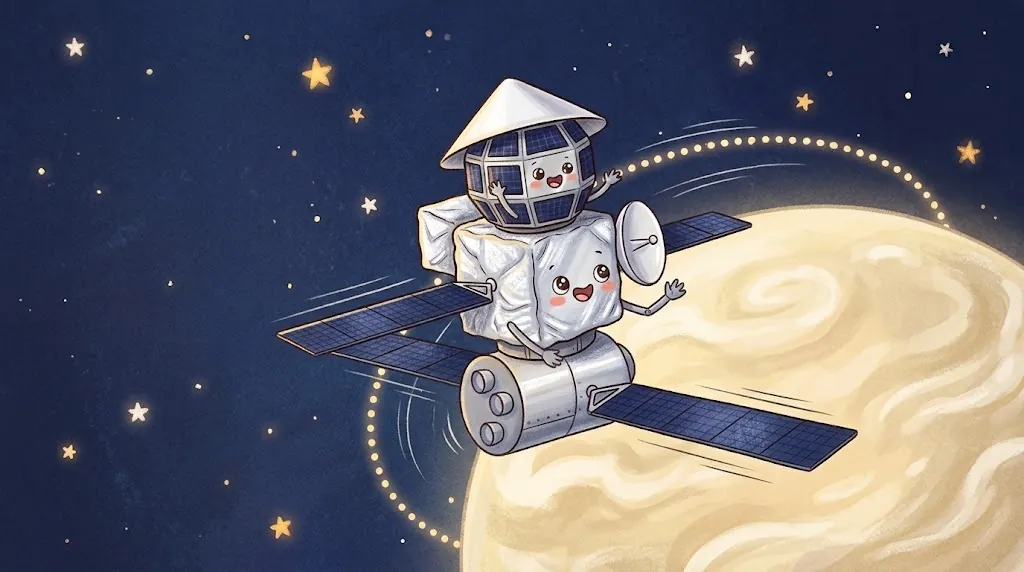
The spacecraft stack swings past the cloudy yellow planet Venus along a glowing curved path, and Bepi and Mio cheer.
๐Ÿ‘‡ Tap a flyby!

Bepi and Mio also got help from the planets! When a spacecraft swings close past a planet, the planet's gravity tugs on it and changes its path and speed. It's called a flyby.

They made 9 flybys: Earth once, Venus twice, and Mercury six times! Each one helped them slow down to match Mercury. ๐Ÿ‘† Tap the flybys.

โ›ฝ Flybys are like a free ride. Most of the change Bepi needed came from the planets, not from fuel.
In a sunny old classroom, a smiling professor points at chalk drawings of the Sun, planets and a curving path that swings around one planet toward another.

Who thought of using flybys to reach Mercury? An Italian scientist named Giuseppe Colombo. His friends called him Bepi!

In 1970, he showed that a spacecraft could swing past Venus to reach Mercury. NASA's Mariner 10 did it, and visited Mercury three times. The mission is named after him. ๐Ÿ‘† Tap the chalkboard.

๐Ÿ” Colombo also figured out a Mercury puzzle: it spins around exactly 3 times for every 2 trips around the Sun.
Uh-oh! In April 2024...

In April 2024, there was a problem. The engines could not push at full power anymore. Without enough push, Bepi and Mio might not be able to stop at Mercury!

The team didn't give up. They worked out a new path that needed less pushing. It takes about 11 months longer, but it works. ๐Ÿ‘† Compare the plans.

๐Ÿงฉ Space engineers solve problems from millions of kilometers away. They can't fix the engine with a screwdriver, so they change the plan instead.
The engine module with its long solar wings drifts away, and Bepi, with Mio in the cone hat, waves goodbye. Mercury waits ahead.

On September 3, 2026, the engine module's job was done. It let go and drifted away. Thank you, engine module!

Now Bepi carries Mio by itself. It uses its own small thrusters to aim very carefully at Mercury. ๐Ÿ‘† Wave goodbye.

๐ŸŽฏ In late September 2026, Bepi fired its thrusters for a tiny correction of just 11.4 meters per second, to aim at exactly the right spot.
Counting down...

Bepi and Mio plan to arrive on November 21, 2026. By then, they'll be moving at almost the same speed as Mercury. So Mercury's gravity can catch them gently, like catching a ball tossed softly.

Their first orbit is a huge, stretched-out loop. Then they'll slowly make it smaller. ๐Ÿ‘† Watch Mercury catch them!

๐Ÿงญ Their orbits go over Mercury's north and south poles, so as Mercury turns underneath, they can see the whole planet.
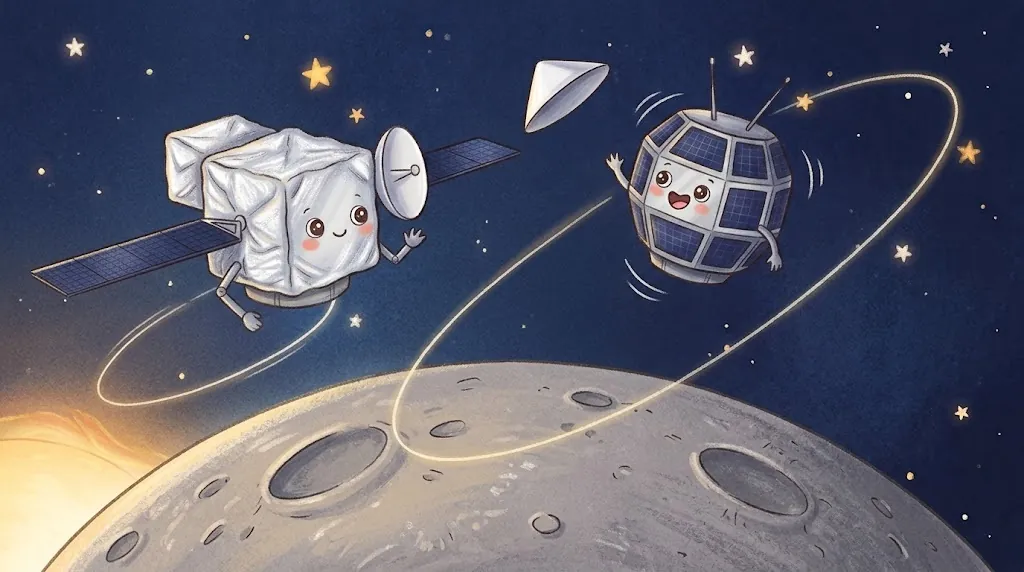
Above Mercury, Mio spins away from Bepi and waves, while the empty cone hat floats off. Two glowing orbit lines circle the planet: a small one and a big stretched one.
Compare their orbits!

In December 2026, it's time to split up. Mio spins away into its own big orbit, and the white cone floats off. Bye, little brother!

Bepi stays close to Mercury to take pictures. Mio flies far out to feel Mercury's magnetic field. ๐Ÿ‘† Compare their orbits.

๐Ÿ”ฌ Their science work is planned to start in 2027 and last at least one Earth year, maybe longer.
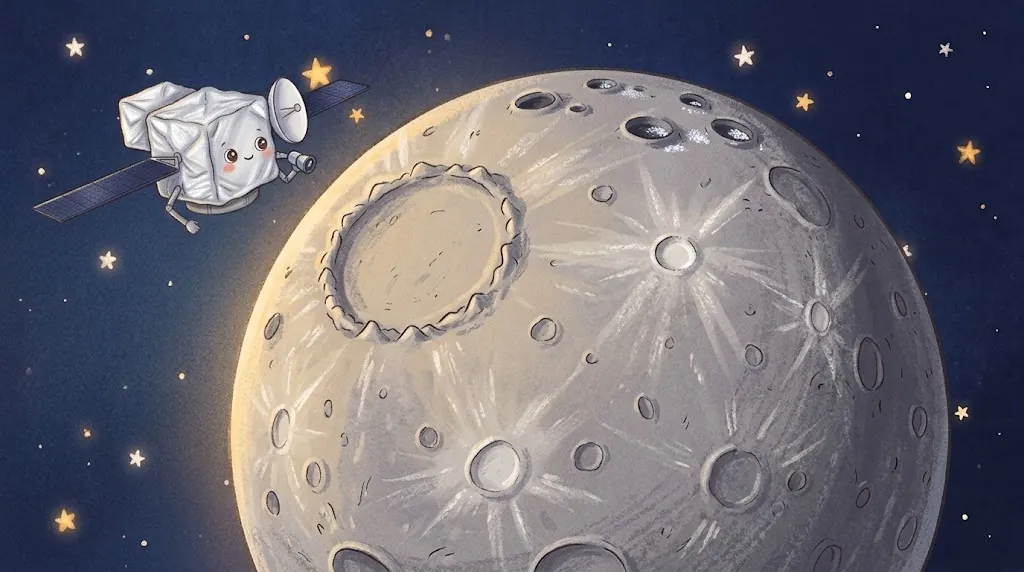
Bepi looks through a camera at Mercury: a gray world of craters with one huge round basin and small dark craters near the north pole holding patches of ice.

What will Bepi and Mio discover? Mercury has a giant crater called the Caloris Basin, and it may even have ice hiding in dark craters at its poles, where sunlight never reaches!

Scientists also want to know why tiny Mercury has a magnetic field, and why its iron middle is so big. ๐Ÿ‘† Tap around the planet.

๐ŸŽจ Many of Mercury's craters are named after famous artists, musicians and writers. One is named after Dr. Seuss!

How to play Mercury Mission!

  1. ๐Ÿš€ Flyby missions: the Sun's gravity speeds you up. Tap FLYBY when you're inside a planet's glowing ring to slow down.
  2. Hold BRAKE to use the gentle blue engines. Arrive at Mercury slow enough (green!) and Mercury catches you.
  3. ๐Ÿ›ฐ๏ธ Orbit missions: fly around Mercury. Move up and down, and tap ๐Ÿ“ท over the glowing spots.
  4. Watch the heat meter: low over the sunny side gets too hot! Fly higher to cool down.
๐ŸŽฎ Play Mercury Mission! 8 missions, from your first flyby to finding ice in the dark, plus Free Orbit. Your stars are saved on this device.
Bepi and Mio above Mercury.

You Know Mercury!

Mercury is close to the Sun, but hard to reach: falling toward the Sun makes you faster, so you must brake. Bepi and Mio used gentle ion engines and 9 flybys to slow down, and Mercury plans to catch them in November 2026.

๐Ÿง  Quick Quiz!

1. What happens as you fly closer to the Sun?
2. How did Bepi and Mio slow down?
3. Where might Mercury hide some ice?
๐Ÿ”ญ Try it with a grown-up: Mercury can sometimes be seen low in the sky just after sunset or just before sunrise. Look it up for your city, and never look at the Sun!