✈️Why Do Airplanes Fly?
🎮 Play
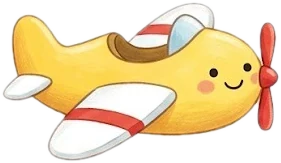
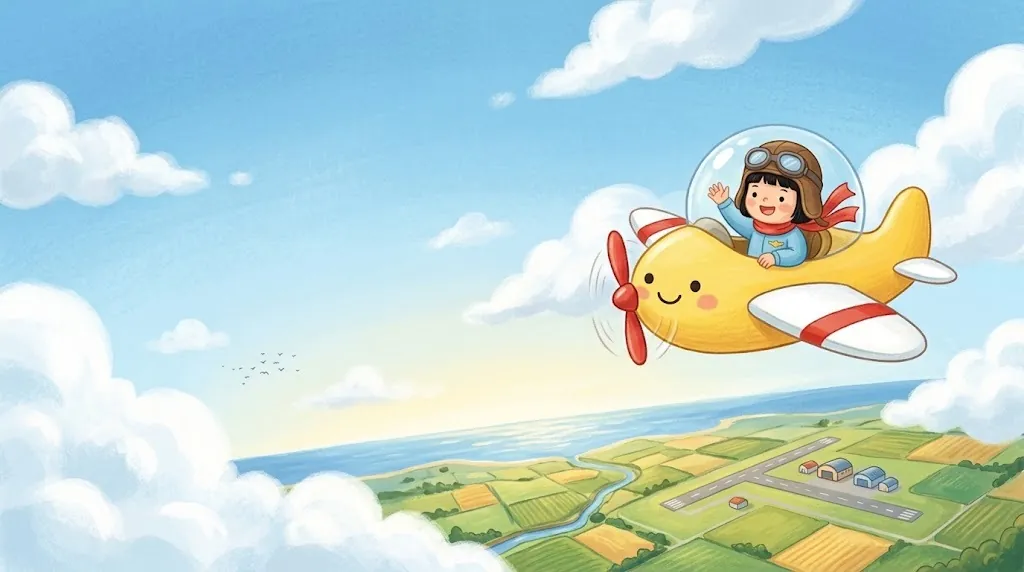
Lin waves from the bubble cockpit of Poppy, a chubby yellow propeller plane with a friendly face, flying over fields, a little airport and the sea.

Why Do Airplanes Fly?

A big jumbo jet can weigh as much as 70 elephants. So how can it float up in the sky, high above the clouds? It's not magic. It's air!

This is Lin, and this is Poppy, Lin's little yellow airplane. Let's find out how Poppy flies!

👆 Tap the glowing circles. Tap 📖 Read to me to hear the story. Press Next ▶ to keep reading, or jump straight to the game.
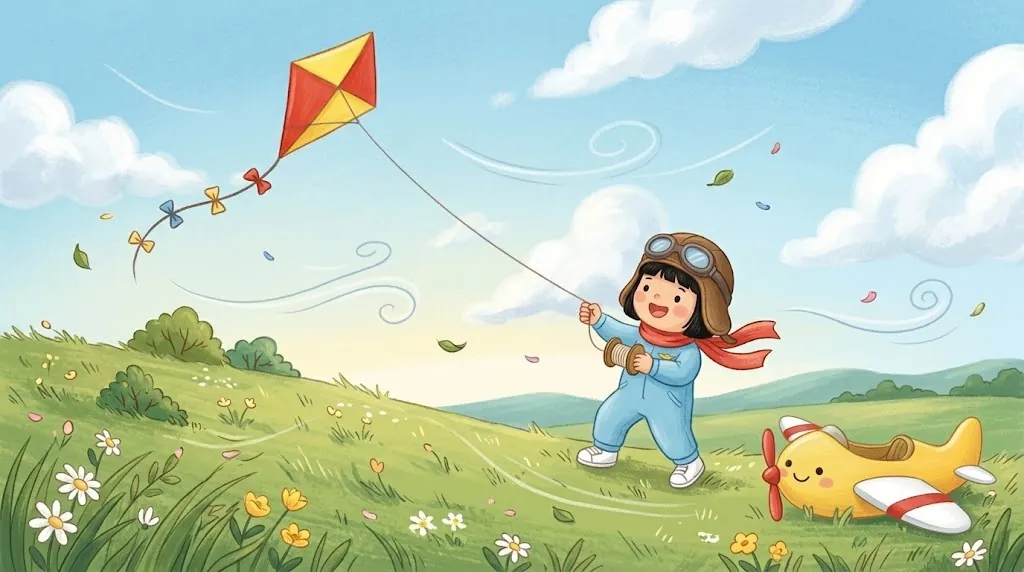
On a windy green hill, Lin flies a red and yellow kite. Poppy the yellow plane is parked at the bottom of the hill.

You can't see air, but it's real stuff! Air is made of tiny, tiny bits that zoom around and bump into everything.

When air moves, it can push. Feel the wind push on your face? That's air! It pushes Lin's kite way up high. 👆 Tap the kite!

⚖️ Air even has weight. All the air in a classroom weighs about as much as three grown-ups!
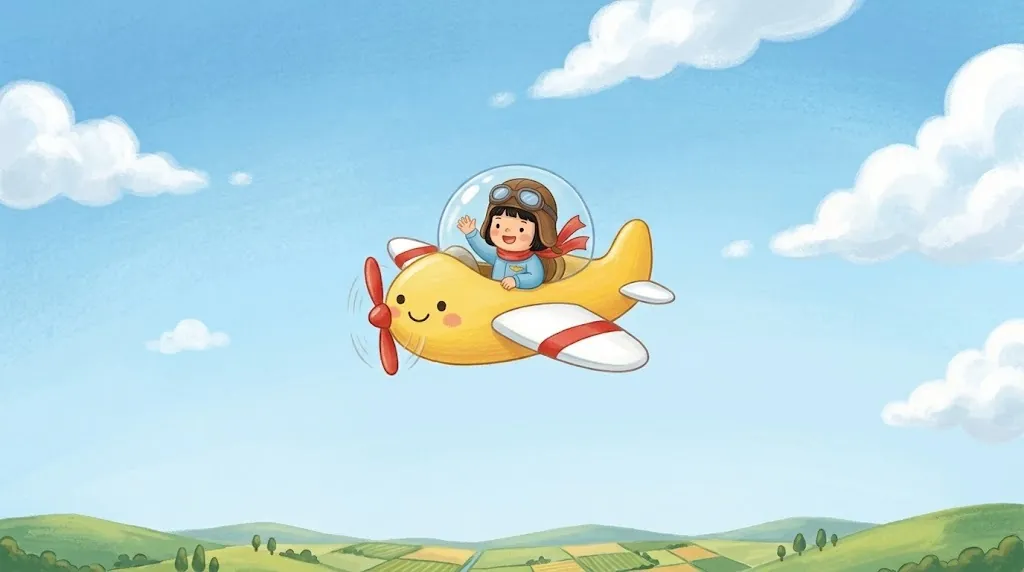
Poppy flies level through a clear blue sky with Lin in the cockpit.

Four pushes and pulls work on every airplane, like a big tug of war. Weight pulls Poppy down. Lift from the wings pushes up. Thrust from the propeller pushes forward. Drag, the air rubbing past, holds Poppy back.

When lift beats weight, Poppy goes up! 👆 Tap each arrow.

🧲 Scientists call these the four forces of flight. Every plane, from a paper plane to a jumbo jet, has all four.
Slide to tilt the wing 👇
Tilt:4°

Here is a wing, cut in half so we can see its shape. It is rounded on top and a little tilted. As it slices through the air, it bends the air down.

Remember action and reaction? The wing pushes air down, so the air pushes the wing up! That push is called lift. 👆 Slide to tilt the wing. Too much tilt? The air can't follow the wing anymore. That's a stall!

🤔 True or false? "The air over the top has to meet the air under the bottom at the back." False! NASA says the air over the top actually gets to the back first. Air speeds up over the top, so it pushes down on the wing less than the air underneath pushes up.
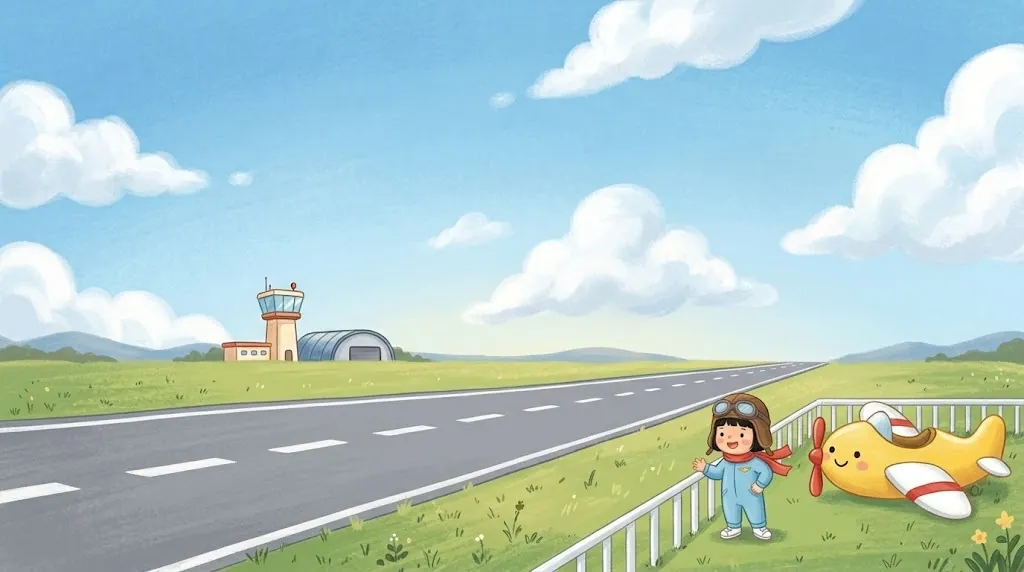
A long runway at a sunny airport. Lin and Poppy watch from behind the fence.
🚀 Speed 0 km/h
⬆️ Lift (the red line = weight)

Wings only make lift when air rushes past them fast. That's why airplanes race down a long runway before they fly.

Go twice as fast, and the wings make four times the lift! A big jet lifts off at about 250 to 300 km/h, more than twice as fast as cars on a highway. 👆 Press Full power!

🐦 Birds take off the same way. Big birds like swans run along the water, flapping hard, until there's enough air rushing over their wings.
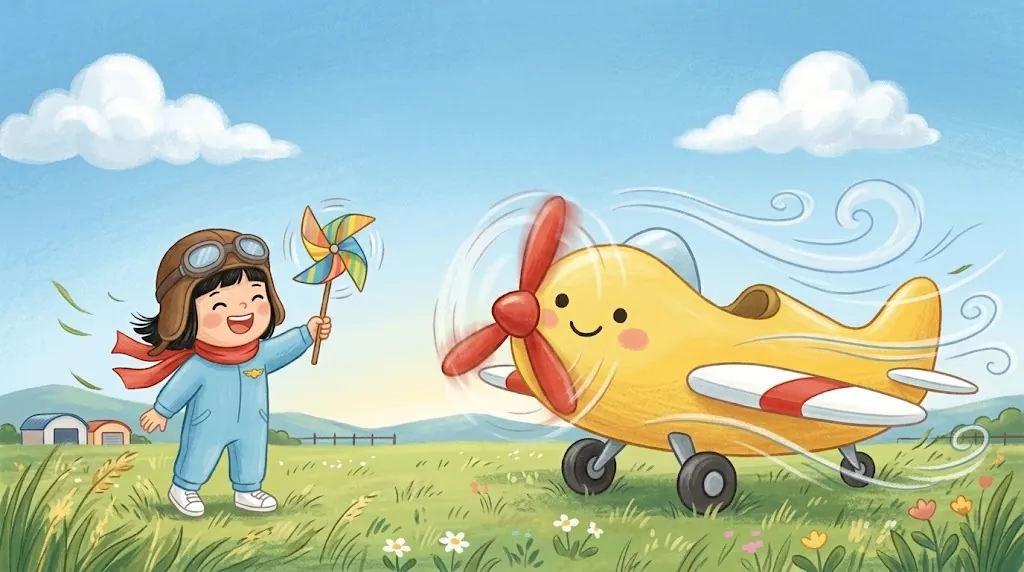
Lin holds a spinning paper pinwheel next to Poppy, whose propeller spins and blows swirls of air backward.

Where does the speed come from? Poppy's propeller is like a spinning pair of little wings. It grabs air and throws it back. Action and reaction: the air pushes Poppy forward! That's thrust.

Big jets have jet engines instead. They suck in air, squeeze it, heat it up and blast it out the back, super fast.

🏊 Drag is the air pushing back. Planes have smooth, pointy, rounded shapes so the air slips past. Swimmers make themselves long and smooth for the same reason!
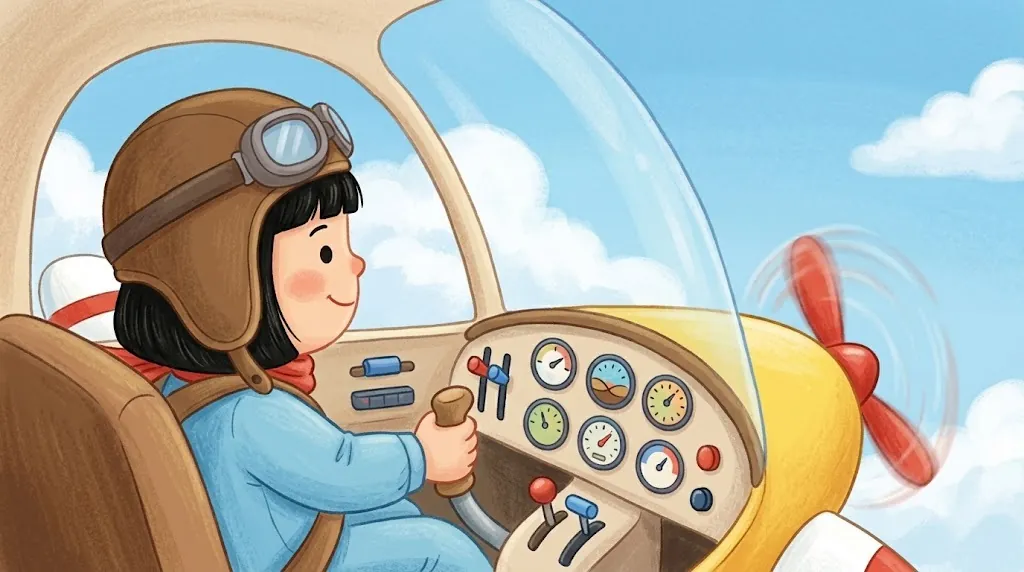
Lin sits in Poppy's cockpit holding the control stick, with round dials on the panel and blue sky through the window.
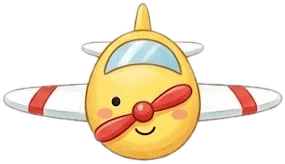
Poppy from the sidePoppy from the front
👆 Try the stick!

How does a pilot steer? With the stick! It moves little flaps on the wings and tail that bend the air.

Pull back: the tail's flap tips up, the tail goes down and the nose goes up. Tilt the stick: one wing gets more lift, the other less, so the plane leans and turns, like a bike leaning into a curve. 👆 Try it!

🦶 Pilots also have pedals for their feet. They move the rudder, the flap on the tall tail fin, to swing the nose left or right.
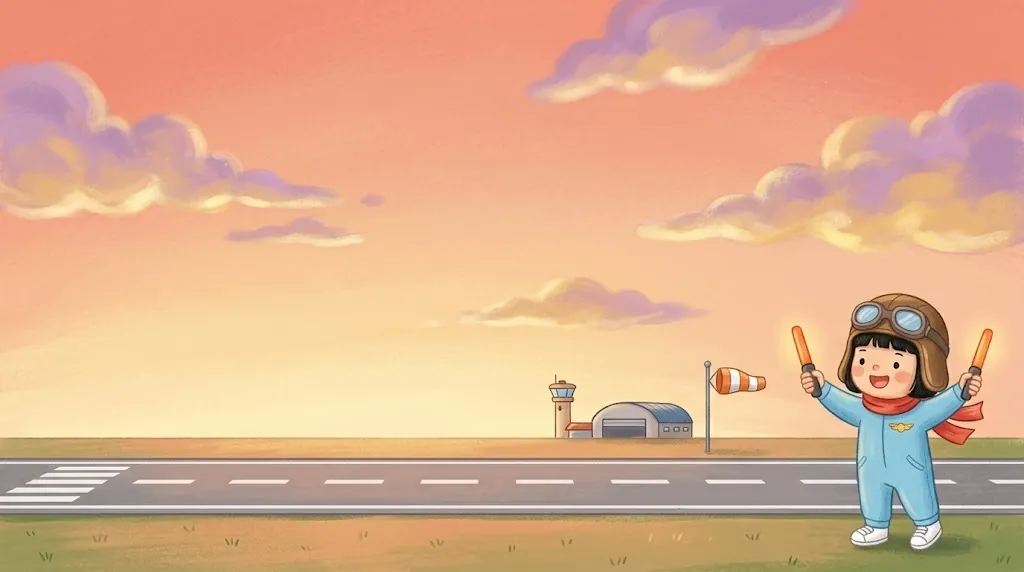
A runway at sunset with a windsock and a little control tower. Lin waves two orange marshalling wands from the grass.
Get ready to land!

Landing is the trickiest part! Pilots go through a checklist: Gear down, so the wheels are ready. Flaps down, so the wing gets bigger and can fly slowly. Then slow down and glide toward the runway.

Just before the wheels touch, the pilot gently lifts the nose for a soft touchdown. 👆 Do the checklist, then land!

✅ Real pilots use checklists every single flight, even pilots who have flown for 30 years. That's how they never forget a step.
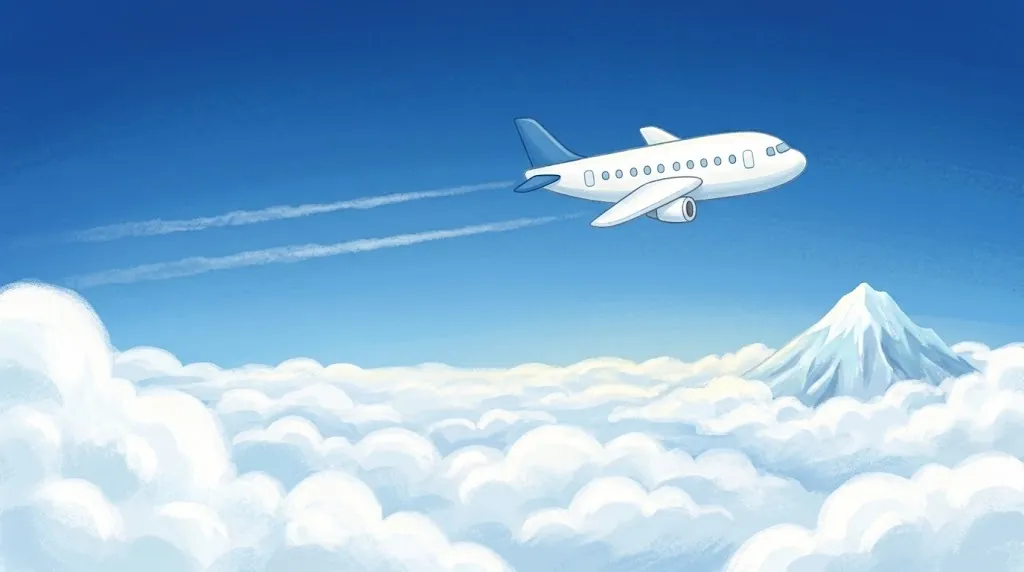
A white passenger jet cruises above a sea of clouds, with a snowy mountain peak poking through far away.
How high do jets fly?

Big jets fly about 10 to 12 kilometers high. That's higher than Mount Everest, the tallest mountain on Earth! Up there the air is thin, so there is less drag and jets can zoom at about 900 km/h.

Stack up Taipei 101, one of the tallest buildings in Taiwan. You'd need about 20 of them to reach a jet! 👆 Press the button.

🛩️ The very first airplane flight, by the Wright brothers in 1903, lasted just 12 seconds and went 36 meters. That's shorter than the wings of a jumbo jet!

How to play Sky Pilot!

  1. Turn the MASTER switch on, then the KEY to start the engine.
  2. Push the THROTTLE up. At about 95 km/h, pull the stick back to take off!
  3. Pull or push to climb or dive, tilt to turn. Fly through the cloud rings.
  4. To land: gear down (3 green lights), flaps 30°, slow down, glide in gently, then brakes.
🎮 Play Sky Pilot! A cockpit with real-style dials, 8 missions from your first take-off to an island hop, plus Free Flight. Your stars are saved on this device.
Lin and Poppy flying over the fields.

You Know Why Airplanes Fly!

Wings bend the air down, so the air pushes the wings up. The faster the air, the more lift. The propeller or jet engine pushes air back for thrust.

🧠 Quick Quiz!

1. A wing pushes air DOWN. Which way does the air push the wing?
2. Why do airplanes race down the runway?
3. What does a pilot do before landing?
✂️ Try it at home: fold a paper airplane. Bend the back edges of the wings up a tiny bit, and its nose goes up, just like a real plane's tail flaps!
Sources: NASA Glenn, four forces on an airplane · NASA Glenn, why the "equal transit" idea is wrong · NASA Glenn, Newton's laws of motion · FAA, Pilot's Handbook of Aeronautical Knowledge (flight controls, flaps, instruments) · Aerospaceweb, airliner take-off speeds · Smithsonian National Air and Space Museum, 1903 Wright Flyer (12 seconds, 36 m) · Lufthansa, Boeing 747-8 (68.4 m wingspan, 442 tonnes at take-off) · Britannica, Mount Everest (8,849 m) · Smithsonian's National Zoo, adult Asian elephants weigh about 2.7 to 5.4 tonnes
Lin and Poppy are pretend, and Poppy's face is just for fun. Numbers are rounded for kids: the 70 elephants compare a fully loaded Boeing 747-8 (about 442 tonnes) with big elephants of about 6 tonnes; the classroom is 8 × 8 × 3 meters of air at 1.2 kg per cubic meter; 20 Taipei 101s (508 m each) is about 10 km.