๐Ÿ—ผHello, Paris!
๐ŸŽฎ Play
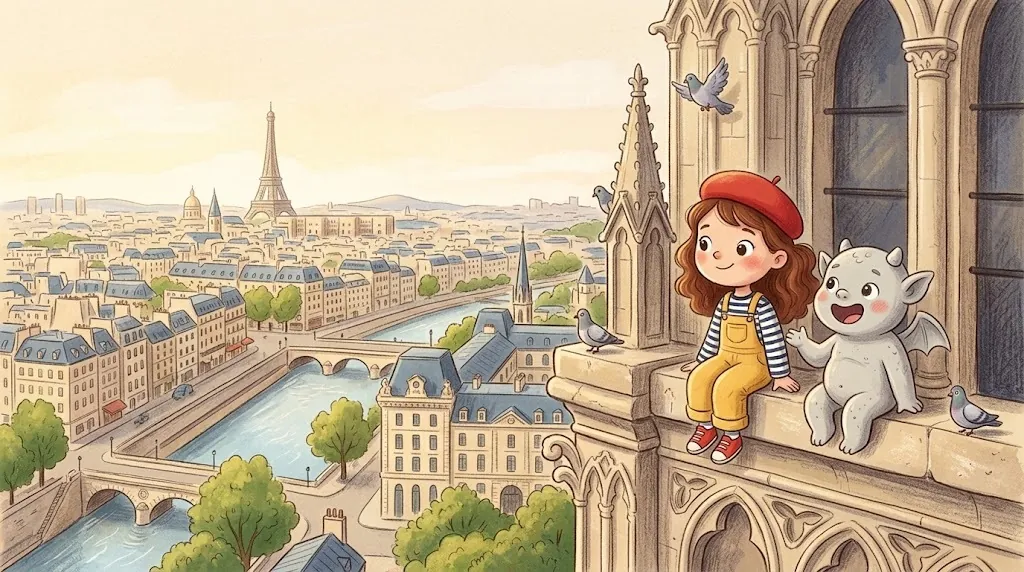
Lea, a girl in a red beret, sits on a high stone ledge of Notre-Dame next to Gus, a chubby smiling stone gargoyle. Below them, Paris, the river Seine and the Eiffel Tower far away.

Hello, Paris!

Paris is one of the most famous cities in the world. It has wide streets, old bridges, a giant iron tower and a cathedral full of stone creatures. But Paris wasn't always big. Long, long ago, it was just a tiny village on an island.

This is Lea, who lives in Paris, and her friend Gus, a little stone gargoyle. Gus has been watching Paris grow for a very long time. Let's travel back in time with them!

๐Ÿ‘† Tap the glowing circles. Tap ๐Ÿ“– Read to me to hear the story. Press Next โ–ถ to keep reading, or jump straight to the game.
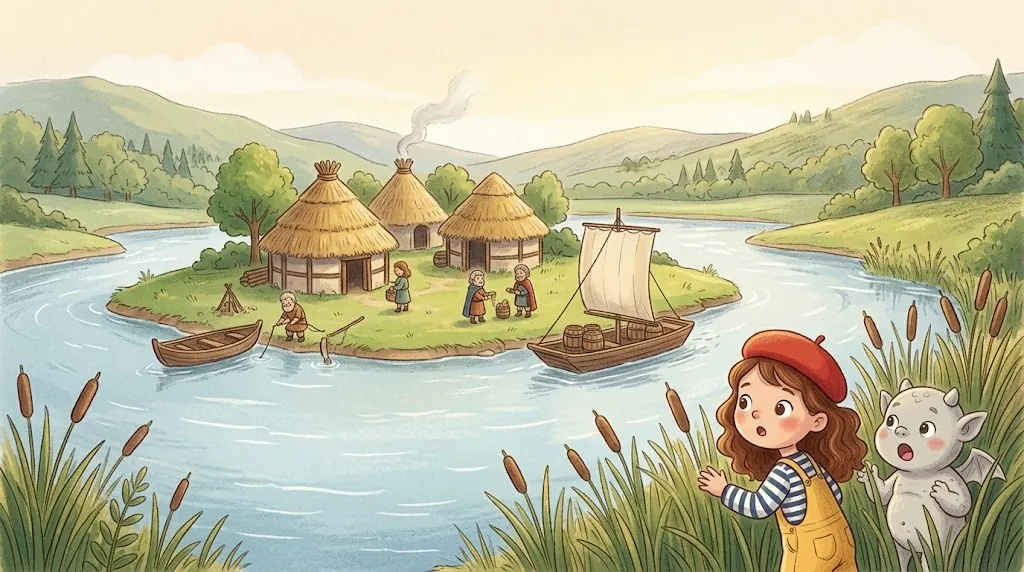
Long ago: a small green island in a wide river, with round thatched huts, fishing boats and a river boat with a square sail. Lea and Gus peek out from the reeds.

More than 2,000 years ago, a group of people called the Parisii lived by a big river, the Seine. They fished, traded, and sailed boats up and down the water. Later, the Romans came and built a town there called Lutetia.

Paris got its name from the Parisii! And the river made Paris busy and rich. That's why there's a boat on Paris's shield, its coat of arms, even today. ๐Ÿ‘† Tap the shield.

โ›ต Paris's motto is in Latin: "Fluctuat nec mergitur." It means "Tossed by the waves, but never sinks." Like a brave little boat!
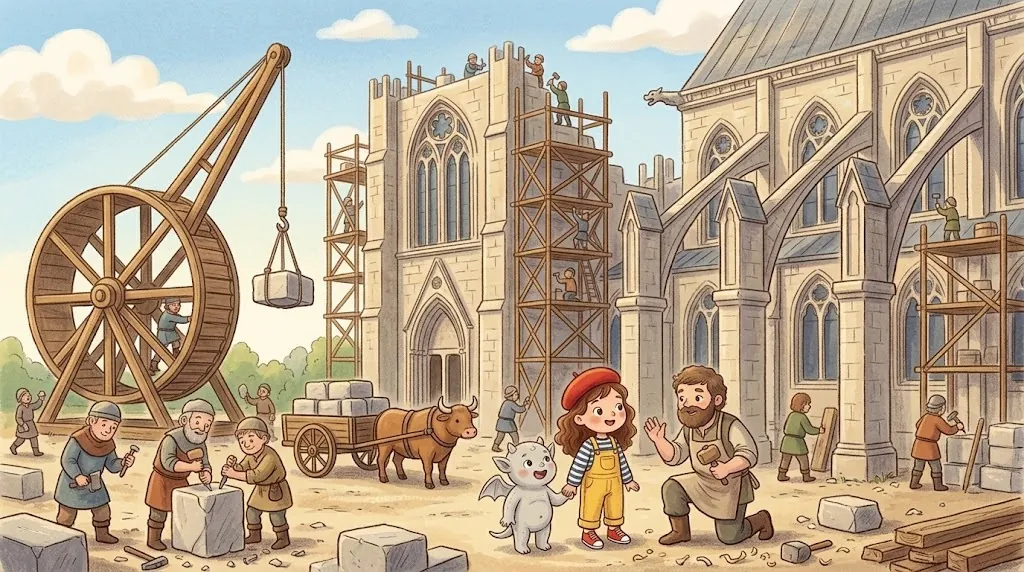
Medieval builders put up Notre-Dame. Wooden scaffolding, a big wooden wheel crane lifting stone blocks, stone arches on the outside of the walls, and Lea and Gus watching with a stonemason.

In 1163, the people of Paris started building a giant cathedral called Notre-Dame. There were no trucks and no electric cranes. Workers carved every stone by hand and lifted them with wooden wheels. It took almost 200 years to finish!

Inside, the ceiling is made of heavy stone arches called a vault. It is so heavy that it pushes the tops of the tall walls outward. So the builders added stone arms outside, called flying buttresses. They push back and hold the walls up. ๐Ÿ‘† Tap the builders' tricks.

๐Ÿ‰ Gargoyles are really rain spouts! Rainwater runs through a little channel on their backs and shoots out of their mouths, far away from the walls, so the stones stay dry.
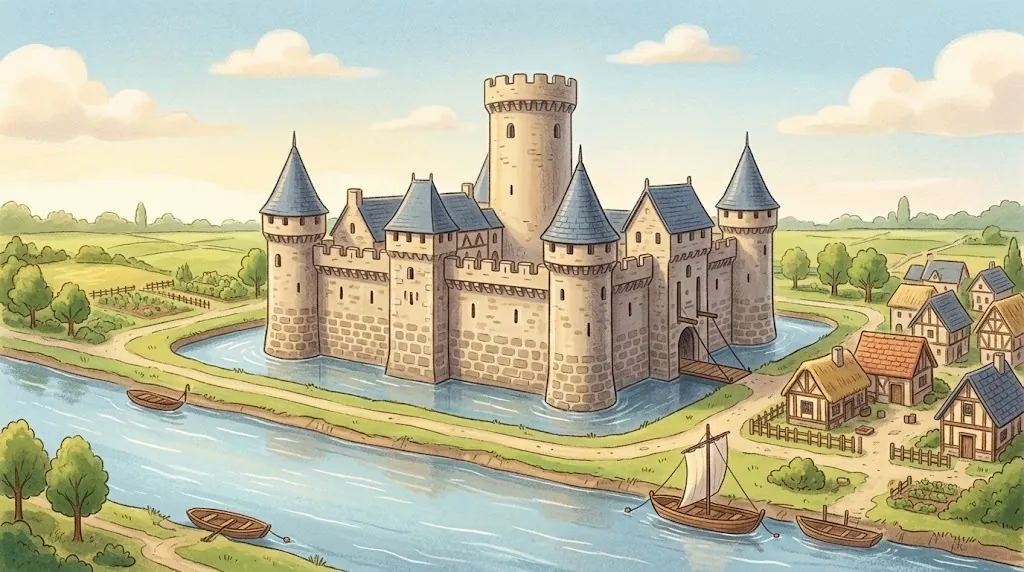
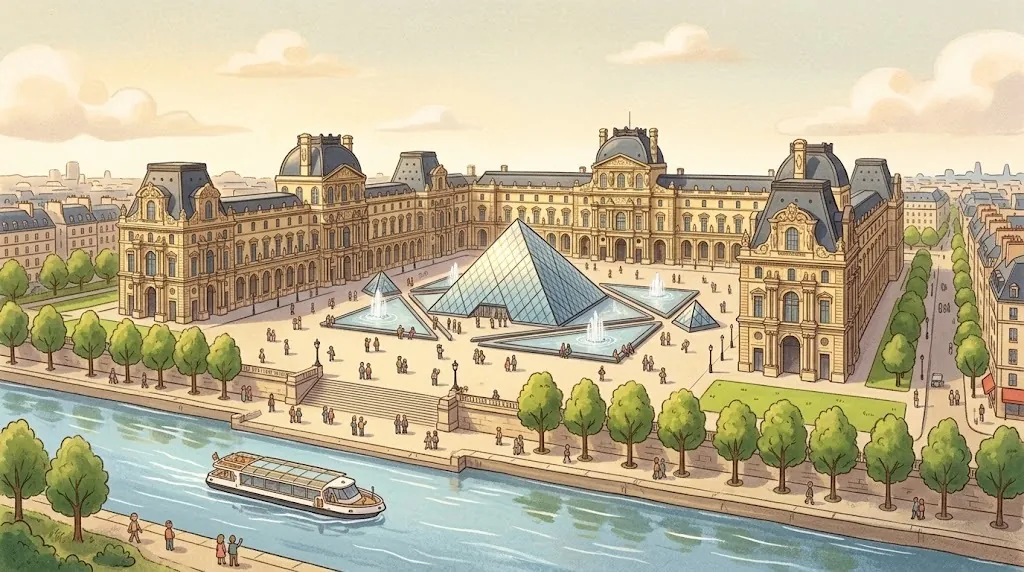
A medieval stone castle with round towers and a moat beside the river. The Louvre museum today: a long golden palace around a big glass pyramid, with visitors and fountains.

Around 1190, a king built a strong castle by the river to guard Paris. It was called the Louvre. Later kings turned it into a huge, fancy palace.

Then, in 1793, the palace became a museum for everyone. Now it's one of the biggest art museums in the world! ๐Ÿ‘† Tap Long ago and Today.

๐Ÿ”บ The glass pyramid is the museum's front door. When it was built in 1989, lots of people said it looked strange. Today, it's one of the most famous sights in Paris!
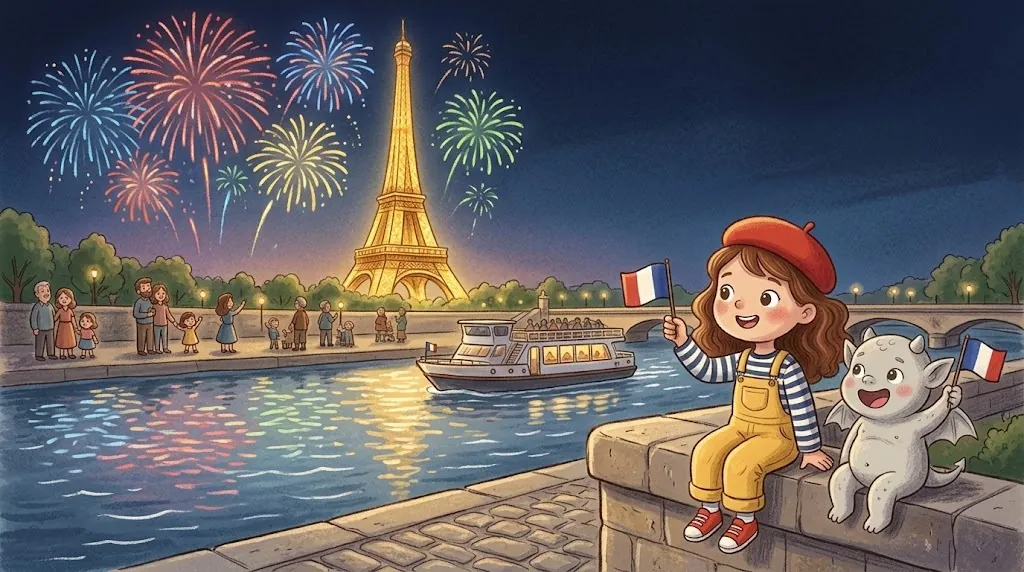
Fireworks burst over the Eiffel Tower at night. Lea and Gus wave little blue, white and red flags on a riverside wall.

Long ago, France had kings and queens who made all the rules. In 1789, many people in Paris were hungry, and they felt nobody was listening to them. On July 14, a big crowd took over an old castle-prison called the Bastille. Big changes began.

France chose three big ideas: Liberty, Equality, Fraternity. That means being free, being fair to everyone, and caring for each other. People in Paris still speak up when they think something isn't fair. The best tools are words, listening and voting. ๐Ÿ‘† Tap the sky!

๐ŸŽ† Every July 14 is France's national holiday, a big party for the whole country, with a parade and fireworks over the Eiffel Tower. The Bastille is gone now. Some of its stones were used to build a bridge!
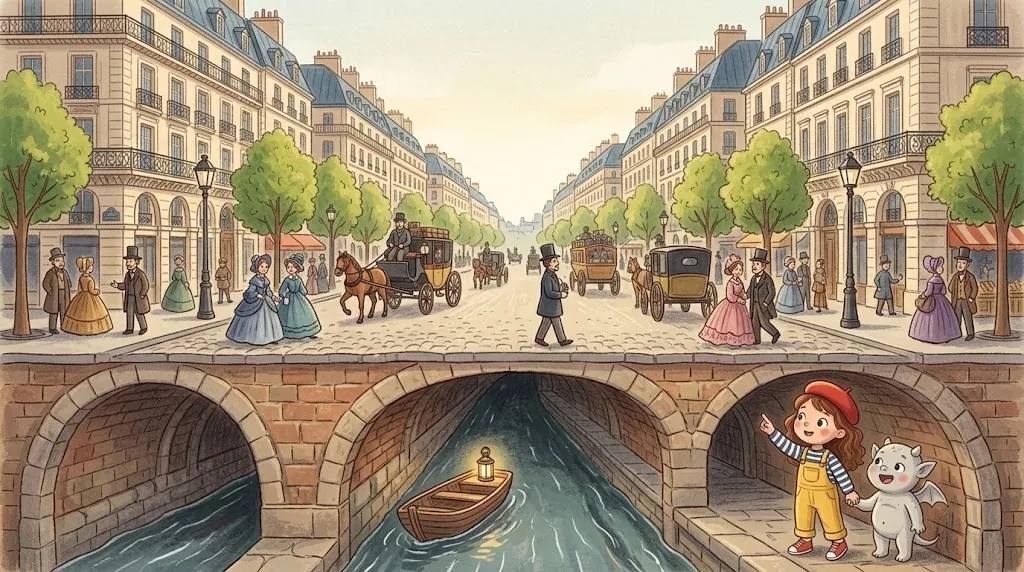
A wide tree-lined boulevard with cream stone buildings and iron balconies, horse carriages and gas lamps. Below the street, a cut-away view shows a big stone sewer tunnel with a little boat.

About 170 years ago, old Paris was crowded and dark. The streets were tiny and twisty, and dirty water ran right down the middle. So from 1853 to 1870, a man named Haussmann gave Paris a giant makeover.

Workers built long, wide streets called boulevards, parks, and rows of creamy stone buildings. And under the streets, they built huge sewer tunnels to carry dirty water away. ๐Ÿ‘† Peek underground!

๐Ÿฆจ Paris's sewers are so big that people once took boat tours through them! The tunnels under Paris are longer than the road from Paris to Rome.
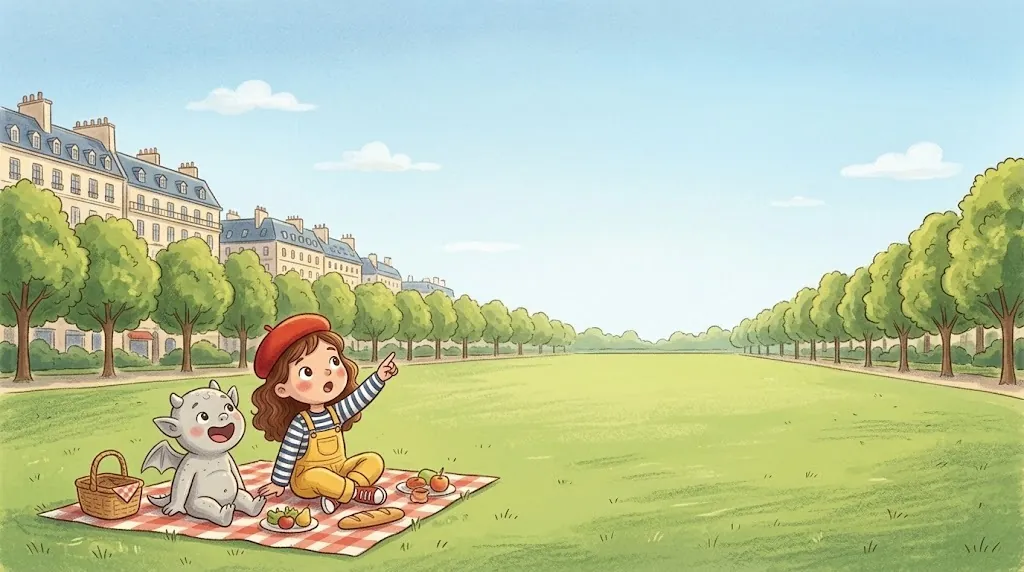
Lea and Gus look up from a sunny park with a lawn and trees.
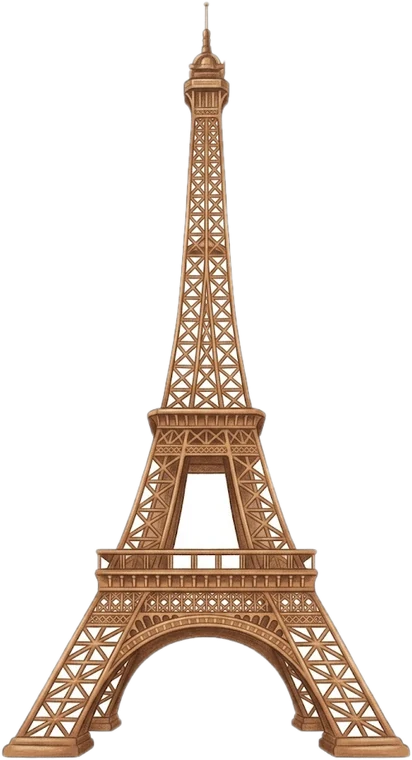
The Eiffel Tower
โ˜€๏ธ Make it sunny!
๐ŸŒ™โ˜€๏ธ

In 1889, Paris threw a giant world's fair. For it, Gustave Eiffel's company built the tallest tower in the world, out of 18,038 iron pieces and about 2.5 million rivets! Many artists said it was ugly, and it was only supposed to stay for 20 years.

But the tower was great for sending radio messages, so it was saved. Now people love it! On a hot, sunny day, the iron on the sunny side stretches a tiny bit, and the top leans away from the sun. ๐Ÿ‘† Slide the sun.

๐ŸŽจ Every 7 years, painters give the tower a new coat, about 60 tonnes of paint. That's as heavy as 10 big elephants!
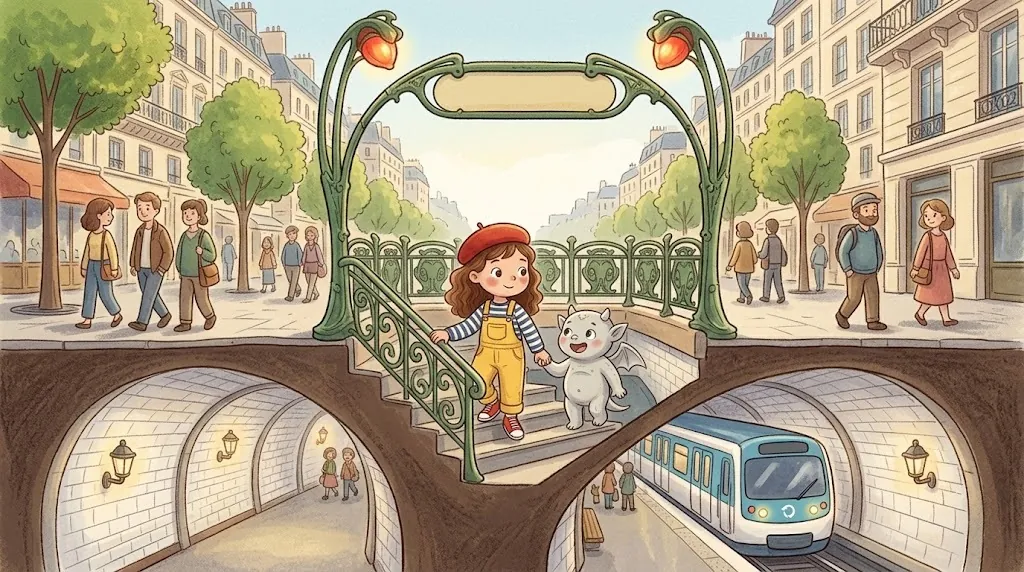
A green iron Metro entrance shaped like curly plant stems with two glowing lamps like flower buds. Stairs lead down to a tunnel where a little train waits. Lea and Gus walk down the steps.

In 1900, Paris opened its first underground train, the Mรฉtro. Now trains zoom through tunnels under the whole city, with more than 300 stations.

Look at the entrance! An architect named Hector Guimard made it out of green iron that curls like plants and flowers. ๐Ÿ‘† Tap the lamps, and listen for the train!

๐ŸŒฑ Guimard's plant-like style is called Art Nouveau, which means "new art." You can still walk through about 86 of his entrances in Paris today.
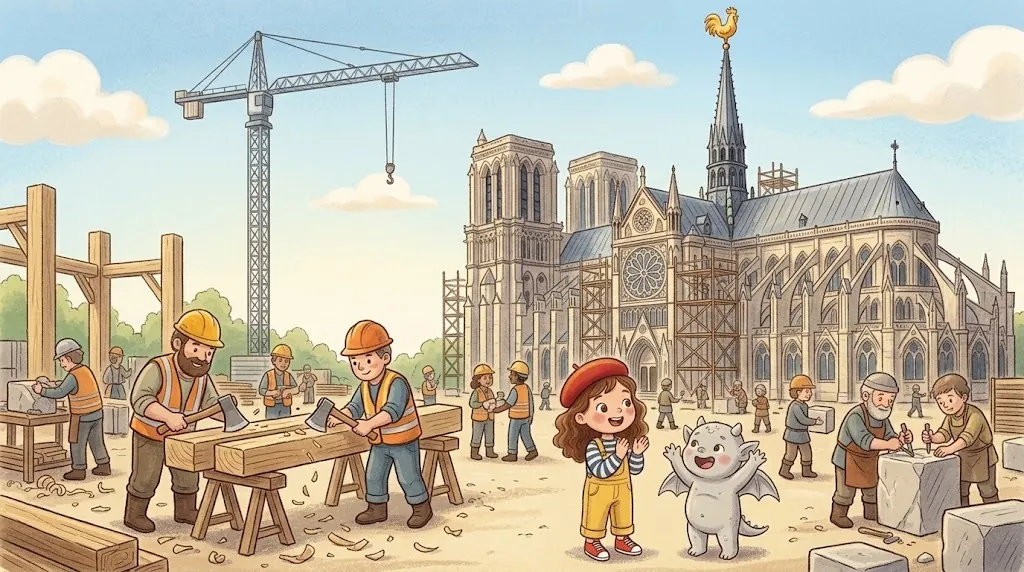
Carpenters shape big oak beams with axes in front of Notre-Dame, which is covered with scaffolding. A new pointed spire with a golden rooster on top rises above the roof.
๐Ÿ”จ Rebuild Notre-Dame
Tap to help!

On April 15, 2019, a fire burned Notre-Dame's old wooden roof, and its tall spire fell. People all over the world felt very sad. But the people of Paris said: "We will build it again."

Carpenters chose big oak trees and shaped the beams by hand with axes, the way builders did 800 years ago. Stonemasons, glassmakers and painters helped too. In December 2024, Notre-Dame opened again, with a new spire and a golden rooster on top! ๐Ÿ‘† Help rebuild!

๐Ÿ“ The new golden rooster on the spire has flame-shaped feathers. Its designer calls it a phoenix, a bird from old stories that rises again after a fire.

How to play Cathedral Builders!

  1. Stack the walls: the crane swings a stone. Tap to drop it right on top!
  2. Hold up the vault: the heavy stone ceiling pushes the walls out. Drag a flying buttress to where the red push arrow is.
  3. Storm! Drag gargoyles to the gutters so the rain shoots far away and the walls stay dry.
๐ŸŽฎ Play Cathedral Builders! 8 levels, from a little chapel to the new spire with its golden rooster, plus Free Build. Your stars are saved on this device.
Lea and Gus on the cathedral looking over Paris.

You Know Paris!

A tiny island village became a giant city. People built a cathedral, a castle that became a museum, wide boulevards, an iron tower and trains under the ground. And when something broke, they built it again.

๐Ÿง  Quick Quiz!

1. What do gargoyles really do?
2. Why does Notre-Dame have flying buttresses?
3. What saved the Eiffel Tower?
๐Ÿงฑ Try it at home: build an arch with books or blocks. Push down on the top. Can you feel the sides want to slide out? Hold them with your hands, just like flying buttresses!